
Subway Surfers Tips and Tricks for Better Runs
Strong Subway Surfers play comes from reading the next 2 obstacles, keeping 1 escape lane, and making inputs early enough to preserve a second move. These mechanics apply to Subway Surfers across ordinary runs.
Which Subway Surfers tips matter first?
Prioritize survival, visibility, and a clean next input before coins or short-term rewards. A missed coin costs 1 pickup; a late dodge can end the run.
Use this order during play:
- Identify the next obstacle and its open lane.
- Check what follows it before committing.
- Keep the character near a route with 2 exits.
- Collect coins only when the line preserves that route.
- Spend a hoverboard or revive according to the run’s goal, not from habit.
How should you read 3 lanes?
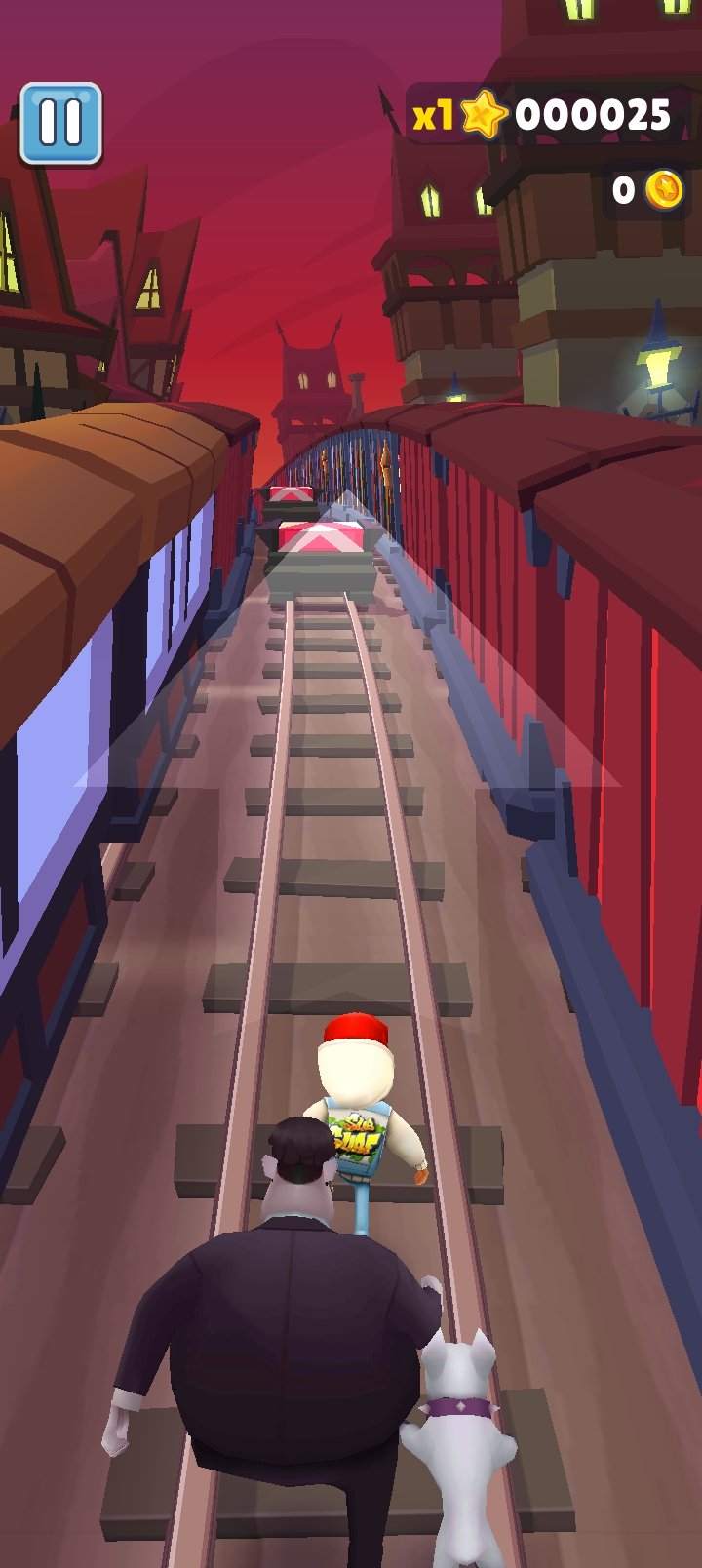
Look past the character and read the track from far to near. The farthest visible obstacle gives planning time; the nearest obstacle confirms the input.
Avoid sitting mentally in 1 lane. Treat the center lane as an information position when all 3 routes remain open, but move early when an obstacle sequence closes the center. Trains, barriers, and ramps matter as sequences: the safe lane for obstacle 1 can become the trapped lane for obstacle 2.
Keep 1 escape direction uncommitted. Rapid left-right corrections consume the same reaction window needed for a jump or roll.
How do jump, roll, and lane changes combine?
Jumping preserves more options than a fixed vertical move. SYBO confirms that the character can change lanes mid-jump and can land early by swiping down.
Use the combination deliberately:
- Jump, then move left or right to correct the landing lane.
- Swipe down in the air when the long arc would carry the character into the next obstacle.
- Roll only after confirming the next obstacle does not require an immediate jump.
- Use a roof or raised path for a longer view when the route remains safe.
A light obstacle contact is a bump rather than an instant crash, but repeated bumps let the guard close the gap. Treat the first bump as a warning to simplify the next 3 inputs.

When should you collect or skip coins?
Collect a coin line when it matches the safest route. Skip the line when it pulls the character across a blocked lane, hides the next obstacle, or forces a late diagonal correction.
A Coin Magnet changes the decision because nearby coins collect without exact lane alignment. Use that time to choose the cleanest path rather than weaving for every coin. Mission requirements can change priority, but survival still protects the entire run’s value.


How should power-ups be used?
Power-ups change route choices, not just reward totals. A Jetpack removes ground obstacles for its active period; Super Sneakers increase jump height and demand earlier landing decisions; a Coin Magnet reduces collection-driven lane changes; a 2× Multiplier raises score growth.
Do not chase a power-up through a closed route. Read the tile after the pickup before swiping toward it. SYBO also confirms that Headstarts and Score Boosters can be combined, so decide whether the run’s goal justifies spending both before launch.

What should you improve between runs?
Use the result screen as a diagnosis. Record whether the run ended from a late read, wrong lane, jump arc, roll timing, bump sequence, or resource decision.
Complete mission sets to raise the base score multiplier, and upgrade power-ups according to the objective that limits current progress. A coin-focused session and a high-score attempt need different priorities. Characters are largely selection goals; boards and power-ups can change the decisions available during a run.
Practice 1 mechanic for 5 runs. Mixing lane-reading, landing control, coin routes, and board timing in one practice block hides which skill improved.
Which mistakes end Subway Surfers runs?
Five errors account for weak runs:
- watching the character instead of the next obstacle sequence;
- changing lanes twice when 1 early move was enough;
- following coins into a route with no second exit;
- allowing a jump to finish when an early down-swipe creates a safer landing;
- saving every board or revive until after the run has already ended.
Fatigue matters on long attempts. Pause between runs when reaction timing starts drifting; repeating tired inputs trains the error rather than the correction.
Where should you go deeper after the basics?
The Subway Surfers high-score guide covers multiplier growth, run length, boosters, revives, and score efficiency. The Subway Surfers hoverboard guide covers crash protection, power combinations, and board-choice logic.
What does Stay Low do in Subway Surfers?
Stay Low is a hoverboard power that automatically rolls under low obstacles while the board is active. The Subway Surfers hoverboard guide explains how board powers change route decisions.
Is there one best lane?
No. The best lane is the route that preserves visibility and the next escape input. Obstacle sequences change that route continuously.
Should every coin be collected?
No. A coin line is valuable only when it does not reduce survival or the current mission goal.
Can you move sideways while jumping?
Yes. Mid-air lane changes and early landing with a down swipe are documented game mechanics.